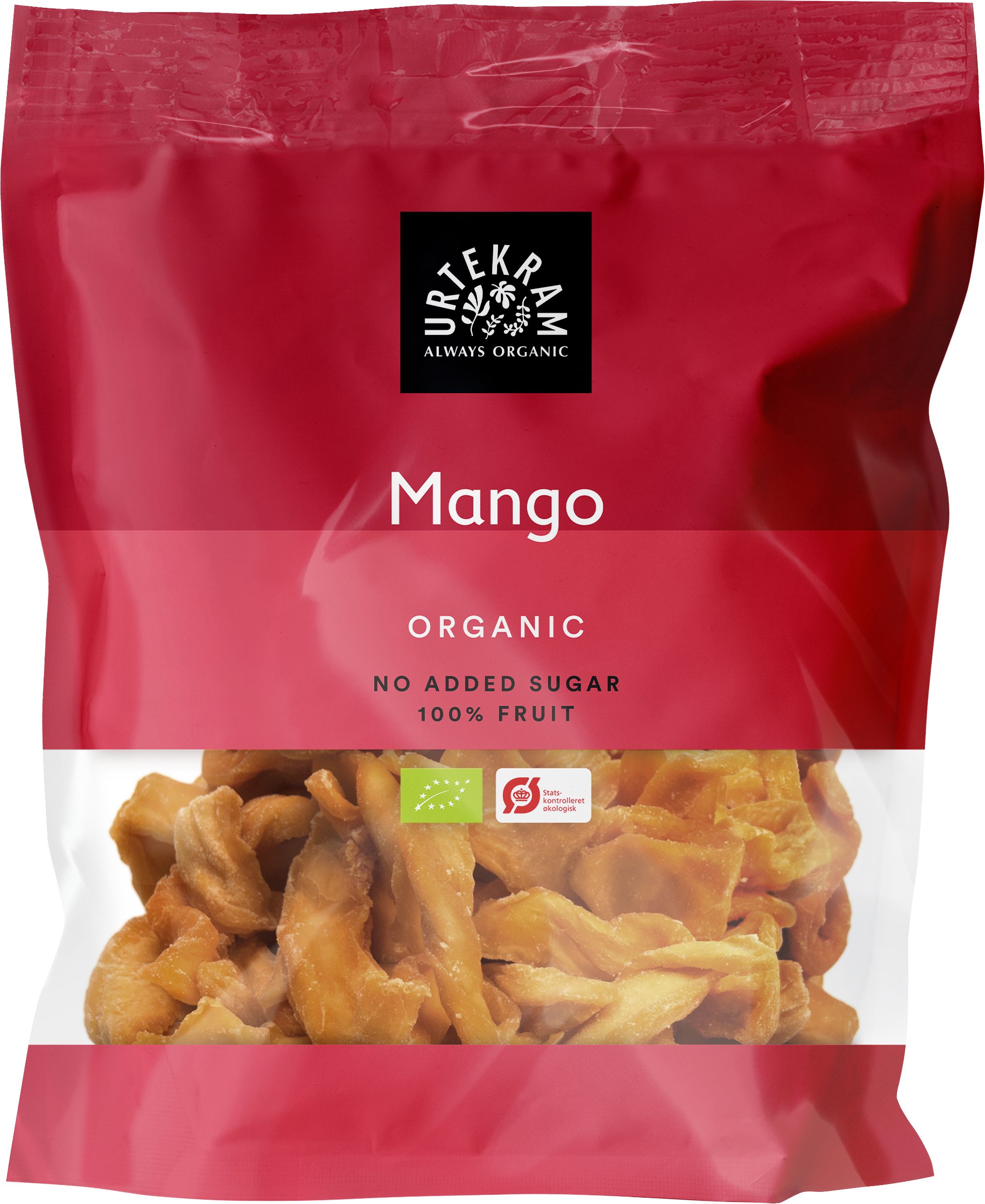
Dried mango, organic URTEKRAM, 90 g
Healthier picks of the same kind

| Nutrient | 100 g | 90 g |
|---|---|---|
| Energy | 1240 kJ / 293 kcal |
264 kcal
13% RI
|
| Fat | 2.2 g |
2 g
3% RI
|
| of which saturates | 0.5 g |
0.5 g
2% RI
|
| Carbohydrate | 61 g |
55 g
21% RI
|
| of which sugars | 60 g |
54 g
60% RI
|
| Protein | 2.9 g |
2.6 g
5% RI
|
| Fibre | 8.4 g |
7.6 g
|
| Salt | 0.06 g |
0.1 g
1% RI
|
RI – reference intake for an adult (2000 kcal).
From the product label · updated 2026-10
- Sugars −15
- Energy −3
- Protein +1
How this is worked out
We use the Nutri-Score method: points for energy, sugar, saturated fat and salt, less points for protein, fibre and fruit and vegetable content. Drinks, oils and cheese are judged on their own scales — otherwise olive oil would look worse than a sugary drink purely for being calorie-dense.
Shops do not publish fibre, so we treat it as zero. Whole grain and pulse products may therefore score slightly lower here than the label on the packet says.
1 ingredient · No additives
Tap an ingredient to see every product that contains it.
Common questions
- How many calories are in Dried mango, organic URTEKRAM, 90 g?
- 100 g – 293 kcal. 1 pack (90 g) ≈ 264 kcal.
- How much protein, fat and carbohydrate?
- Per 100 g: protein 2,9 g, fat 2,2 g, carbohydrate 61 g.
- Is Dried mango, organic URTEKRAM, 90 g a healthy choice?
- Health grade D (14 of 100), from its sugar, saturated fat, salt, fibre and protein.
Added by a community member · 2026-08-06
Follow stebi.me
Label facts, in your feed every day
Where the sugar hides, which has the most protein, which yogurt is better – short comparisons worth saving.